Table of Contents
Looking for a non-surgical way to improve thinning hair and tired-looking skin? PRP Therapy uses the power of your body’s own platelets and growth factors to support collagen renewal, refresh skin quality, and create a stronger foundation for healthier hair growth, making it a smart option for patients who want noticeable results without surgery.
What PRP Actually Involves
PRP stands for platelet-rich plasma. A small blood sample is drawn and placed in a centrifuge to separate the platelet-rich portion from other components. That concentrated plasma is then prepared for treatment and injected into targeted areas of the skin or scalp.
Platelets are known for their role in healing. They release growth factors that help signal repair, which is why PRP is used in different areas of medicine. In aesthetics, that repair response can be useful when skin looks tired, uneven, or less firm than it once did. In hair restoration, it may help support follicles that are still active but no longer functioning as strongly as before.
These platelet-rich plasma benefits are tied to regeneration, not replacement. PRP does not add volume the way fillers do, and it does not change the structure of the face or scalp through surgery. It works by encouraging existing tissue to respond more effectively.
How PRP Supports Collagen Production
Collagen is one of the main structural proteins in the skin. It helps skin stay firm, smooth, and resilient. As collagen production declines over time, patients may start to notice fine lines, a rougher texture, thinning skin, or a loss of bounce. This is where PRP can play a useful role.
When PRP is placed into the skin, the released growth factors can support the repair cycle that contributes to collagen formation. That is why many patients seek it as a collagen stimulation treatment. Instead of creating a surface-level change alone, PRP is used to support what is happening beneath the skin. This is also why results do not appear all at once. Improvement tends to build gradually as the skin responds over the weeks following treatment. Patients often notice changes such as:
- Smoother texture
- Softer appearance of fine lines
- Better tone and clarity
- Skin that looks healthier and more refreshed
These PRP skin rejuvenation benefits are often most appealing to patients who want results that still look like themselves. The skin does not appear artificially altered. It simply looks better supported.
How PRP Can Help with Hair Thinning
Hair loss can be frustrating because it often develops slowly. A patient may first notice more shedding, a wider part, less fullness around the temples, or a ponytail that feels thinner than it used to. Early intervention matters because follicles tend to respond better before thinning becomes advanced.
PRP for hair loss is commonly used to support follicles that are still present but underperforming. Growth factors in PRP may help improve circulation around the follicle, support the scalp environment, and encourage more active growth cycles. For patients with early to moderate thinning, this can make PRP a meaningful non-surgical option.
It is important to keep expectations grounded. PRP does not create instant density, and it is not the right treatment for every kind of hair loss. Response depends on the cause of thinning, the condition of the follicles, and the overall treatment plan. A proper consultation is important because timing and diagnosis affect how useful PRP may be. Still, for the right candidate, PRP for hair loss can be part of a thoughtful plan to support stronger, healthier-looking hair without surgery or a lengthy recovery.
Why Patients Choose PRP Instead of Surgery
Surgical procedures are not the first choice for everyone. Some patients want a shorter appointment, less downtime, or an option that feels more conservative. Others are in an earlier stage of skin aging or hair thinning and want to act before changes become more noticeable.
That is where PRP stands out. It is often seen as a natural regenerative therapy because it uses your own platelets rather than synthetic material or surgical intervention. For many patients, that makes the treatment feel approachable and easier to fit into daily life.
The appeal is not just convenience. It is also the way PRP fits patients who prefer subtle progress. The treatment supports the body’s own repair mechanisms, which means the improvement tends to develop in a steady, believable way. This can be especially important for patients who want refreshed skin or stronger hair growth support without drawing attention to having had something done.
What Treatment and Recovery Are Like
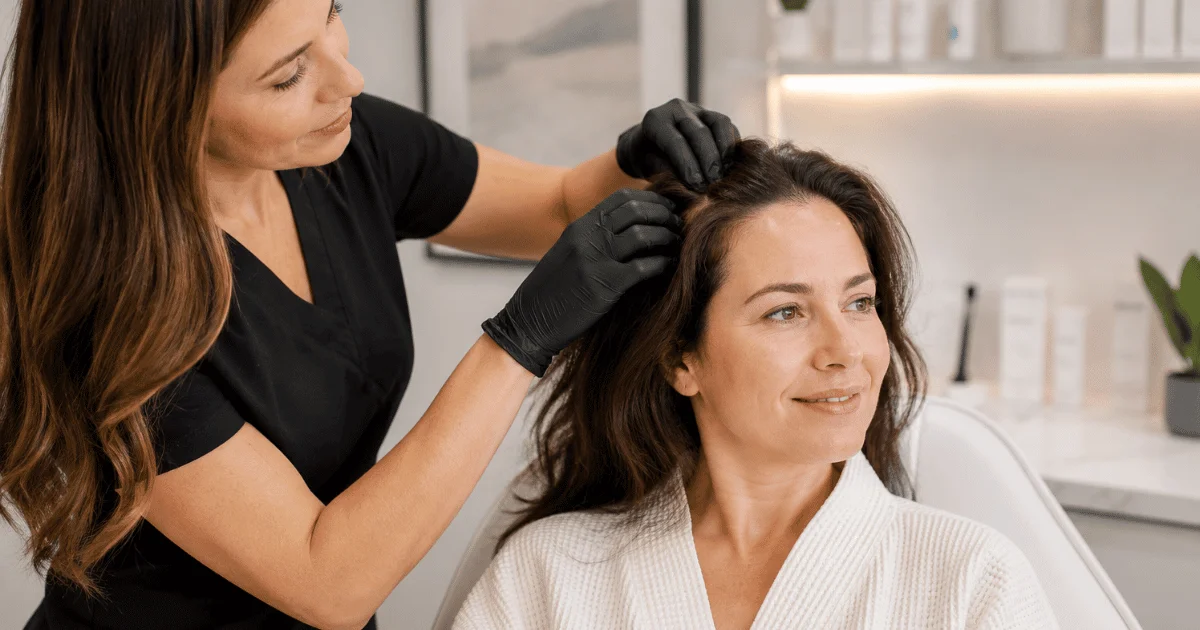
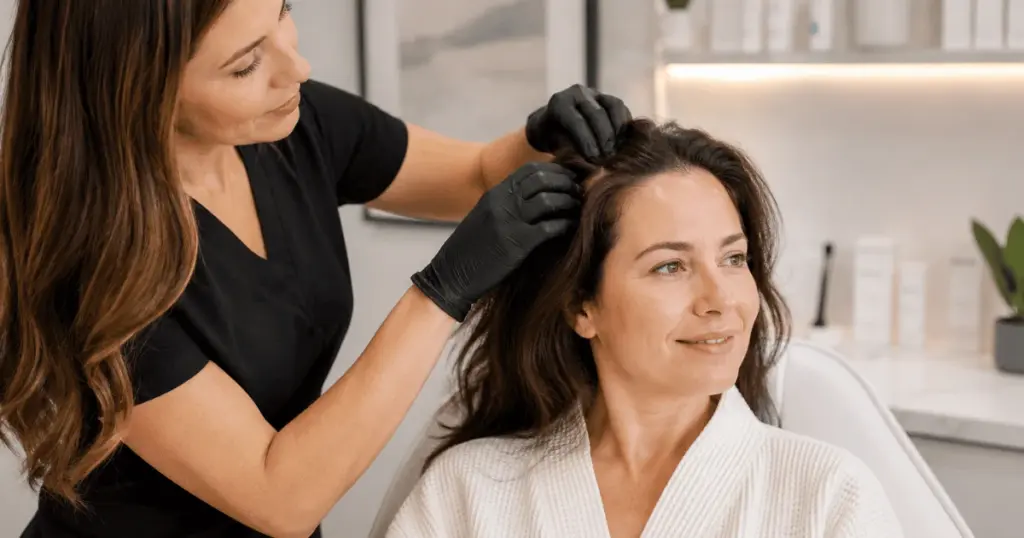
A PRP appointment usually begins with a blood draw. Once the platelet-rich plasma is prepared, it is injected into the chosen treatment area. For skin concerns, PRP may be used on its own or alongside microneedling. For hair concerns, it is typically injected directly into areas of thinning on the scalp. Some discomfort is normal, especially in the scalp, but the procedure is generally manageable. Depending on the area treated, a numbing method may be used to improve comfort.
Afterward, mild redness, swelling, tenderness, or sensitivity can happen. These effects are usually temporary and tend to settle within a short period. Since there are no large incisions or major recovery demands, many patients find the process easier to accommodate than a surgical option. Results also require patience. Skin changes often become more noticeable over several weeks as collagen activity develops. Hair improvement tends to take longer, often unfolding over a period of months. A series of sessions is commonly recommended rather than a single appointment.
Nurse. Aesthetic & Holistic Clinic’s PRP Treatment in Niagara, ON
At Nurse. Aesthetic & Holistic Clinic, PRP is offered as a treatment for patients who want a more natural path toward skin renewal and hair support. In skin-focused care, PRP is used to help diminish the appearance of wrinkles and visible imperfections while supporting a fresher, younger-looking complexion. The benefit of that approach is not about creating an overdone result. It is about helping the skin look healthier, smoother, and better maintained through its own restorative processes.
For patients considering PRP treatment in Niagara, ON, the clinical setting matters just as much as the treatment itself. A careful assessment helps determine if PRP is a strong match for the patient’s goals, skin condition, or stage of hair thinning. It also helps shape a plan that makes sense rather than relying on a generic recommendation.
Schedule your PRP consultation to restore hair growth and rejuvenate your skin naturally.
Frequently Asked Questions
How does PRP Therapy help with hair loss?
PRP Therapy uses concentrated platelets from your own blood to support hair follicles and encourage healthier growth in thinning areas.
What are the main PRP skin rejuvenation benefits?
The main PRP skin rejuvenation benefits include improved skin texture, softer fine lines, and a healthier-looking complexion.
Why is PRP considered a natural regenerative therapy?
PRP is considered a natural regenerative therapy because it uses your body’s own platelets and growth factors to support repair and renewal.